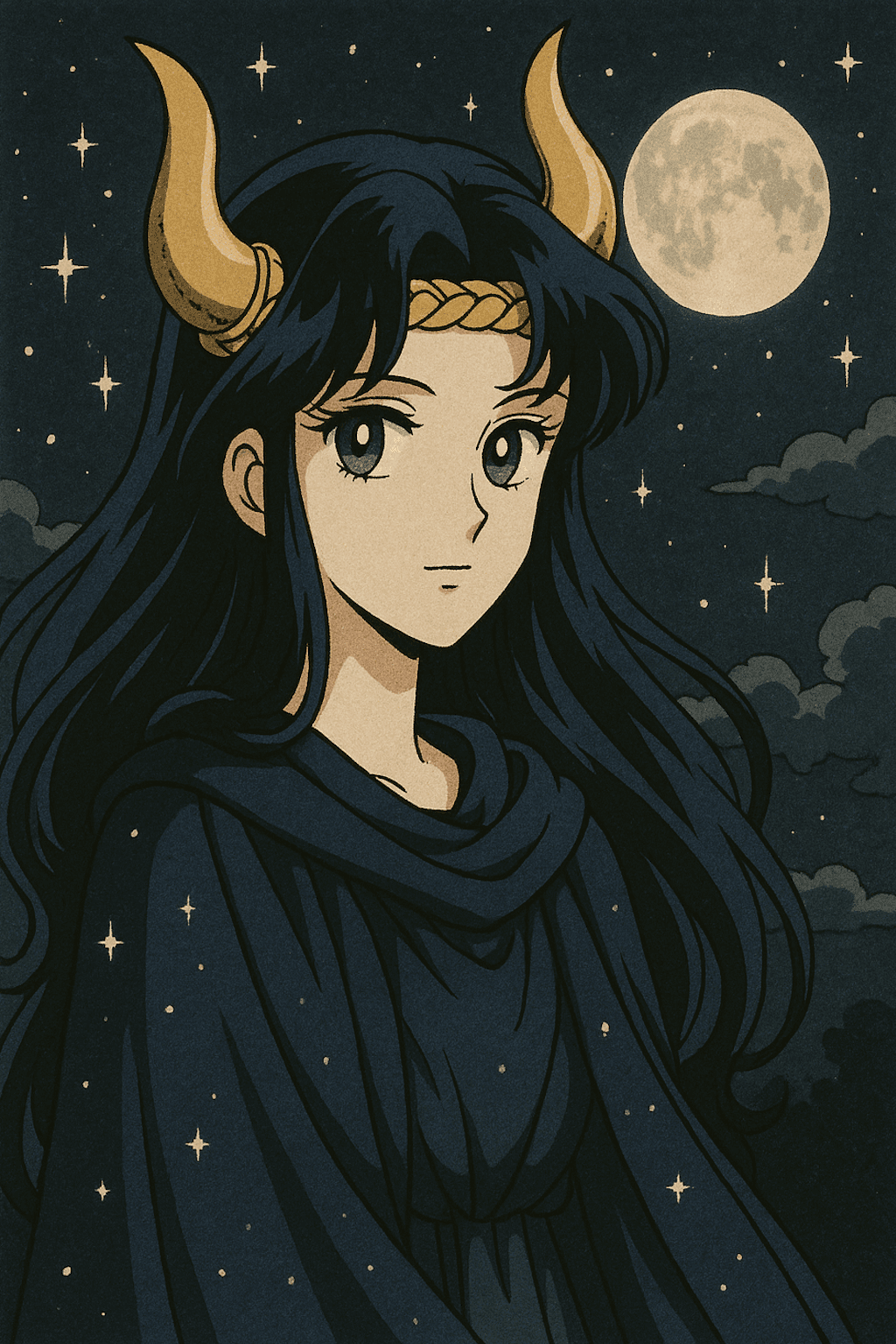
 PlanetNeptune
Other Names
Poseidon/Neptune (Greco-Roman, as the lord of depths), Varuna (Vedic, cosmic ocean, primordial waters), Tiamat (Babylonian, chaos dragon of the deep), Rán (Norse, she who drags the drowned down), Sedna (Inuit, mistress of the deep ocean), Cthulhu (Lovecraft, modern archetype of the incomprehensible deep), Morpheus (Greek, god of dreams), Hypnos (Greek, god of sleep), the Bardo wrathful deities (Tibetan Buddhist), Nyarlathotep (Lovecraft, the crawling chaos), Lilith (Jewish, night demoness), Nammu (Sumerian, primordial sea)
Akin Ghosts
Related Posts
Add links or text here
Translations:
High Church:
Noktsmor (nókʷtsmor-)
Sanskrit:
निशामर (niśāmara)
Church Runes:
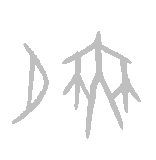
The word "mare" comes from the same root as Mara—the Buddhist demon of illusion and distraction who assailed Siddhartha under the Bodhi tree, and whose name is cognate with "nightmare," with the Old English mære (an incubus or evil spirit), and with the broader Indo-European concept of a suffocating spirit that sits upon sleepers. Nightmare is the realm of Varuna in his older, darker aspect, the god of the cosmic waters, of the primordial ocean, of the vast and terrible depths that existed before creation. In Norse cosmology she dwells in the mists of Niflheim, the world of cold and darkness and formless potential that preceded the creation of all things. In Jungian psychology, Nightmare is the collective unconscious itself, the vast psychic ocean that lies beneath individual consciousness, populated by archetypes, symbols, and forces that feel alien and overwhelming precisely because they are older and deeper than the personal self. In the Tibetan Buddhist tradition, the bardo, the intermediate state between death and rebirth, is described in terms that perfectly mirror Nightmare: a twilight realm of terrifying visions, wrathful deities, and symbolic encounters that can either liberate or entrap the consciousness depending on whether it recognises them as projections of its own mind. The key teaching across all these traditions is identical: what terrifies in the deep is not alien but intimate, and the horror dissolves the moment recognition dawns.
Mare comes from the same word as Mara, and this is essential. Daymare, Nightmare, and Sight form a triad: the three outer Ghosts beyond Muse's threshold, deeper into the outsideness that separates the knowable solar system from the unknowable void of Doom. They represent the unconscious, the unknown, the regions of experience that most people never voluntarily enter and that threaten to swallow those who do.
(Dune, Litany of Fear)*"I must not fear. Fear is the mind-killer. Fear is the little-death that brings total obliteration. I will face my fear. I will permit it to pass over me and through me. And when it has gone past, I will turn the inner eye to see its path. Where the fear has gone there will be nothing. Only I will remain."
Nightmare is the twilight, a place of eldritch horror, of sheer incomprehensibility which threatens to devour you. She threatens us with the appearance of things that are not there, shadowy hallucinations, the symbolism of dreams that feels meaningful yet the meaning is always just slightly out of reach. We have all had nightmares, or been so sleepy that we fall into hypnagogia and live in a world of darkness and shifting forms. That liminal, drowning, suffocating feeling, the sense that something vast and incomprehensible is pressing in on you from all sides and you cannot wake up, that is the energy of this Ghost.
Nightmare is the dark, sleeping aspect of the unconscious where Daymare is the bright, waking aspect. Where Daymare produces neurosis through false structure, Nightmare produces psychosis through false meaning. The schizophrenic who sees patterns and messages in everything, who hears voices whispering from the static, who feels that the universe is communicating directly with them through signs and synchronicities that no one else can perceive, this is Nightmare's energy running unchecked through a mind that has lost its mooring.|
Heraclitus, Fragment 89: "The waking have one world in common; sleepers have each a private world of their own."
The defining experience of Nightmare is submersion. You are not observing the unknown from a safe distance, you are inside it, and it is inside you, and the distinction between the two has dissolved into a churning dark that presses on you from every side. Things appear in this dark. Faces. Symbols. Shapes that feel like they should mean something—that feel like they mean everything—but the meaning keeps slipping away the moment you reach for it, reforming behind you, whispering just out of earshot. This is not the absence of meaning (that is Daymare). This is meaning in excess, meaning run wild, meaning that has broken free from the structures that normally contain it and is now flooding the mind like seawater through a cracked hull.
(H.P. Lovecraft, "The Call of Cthulhu")"The most merciful thing in the world, I think, is the inability of the human mind to correlate all its contents."
The opening of "The Call of Cthulhu" is the most precise description of Nightmare's energy ever written: the inability of the human mind to correlate all its contents, the placid island of ignorance surrounded by black seas of infinity, the terrifying vistas that open when dissociated knowledge begins to piece itself together. That is what Nightmare feels like from the inside. Not ignorance, but the dawning suspicion that everything is connected in ways you are not equipped to understand, and that the connection itself is alive, and hungry, and aware of you.
Bardo Thodol (the instruction; do not flee): "The natural tendency is for the soul to attempt to flee from these beings in stark, screaming, blood-curdled terror; but if he does, all is lost. The instructions at this stage of the Bardo are for the soul to have no fear, but rather to recognize that the Wrathful Deities are really the Peaceful Deities in disguise."
The Bardo Thodol captures the teaching precisely: the wrathful deities that appear in the bardo are terrifying, yes—they drink blood from skulls, they threaten to dismember you, they are everything your mind has ever feared—but they are projections of your own consciousness. They are you. And the instruction is not to flee but to recognise. If you can recognise the wrathful deities as yourself, as your own unintegrated shadow wearing masks proportionally more horrifying the longer it has been denied, liberation comes instantly. The terror is the doorway. But you have to stop running long enough to look.
And yet acting with Nightmare's energy brings forth prophetic vision, artistic inspiration, and communion with the collective unconscious. She teaches us that what we most fear to confront contains what we most need to integrate. In her realm, what terrifies can transform, and what seems most alien may be the most intimate truth of all. And if one goes further, if one truly accepts Nightmare and faces her down, then the nightmares turn to dreams.
Zhuangzi, Chapter 2 (The Butterfly Dream): "Once Zhuangzi dreamed he was a butterfly, a butterfly flitting and fluttering around, happy with himself and doing as he pleased. He did not know he was Zhuangzi. Suddenly he woke up and there he was, solid and unmistakable Zhuangzi. But he did not know if he was Zhuangzi who had dreamed he was a butterfly, or a butterfly dreaming he was Zhuangzi."