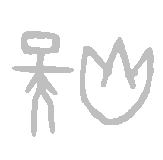
 Other Names*Brahman, Wuji, Monad, God, Dao, Consciousness, *
Related Posts
One-Not-One, Oneness
Translations:
High Church:
Ghutom (ǵʰutóm), Mehter (méh₂tēr)
Sanskrit:
ब्रह्मन् (Brahman)
Church Runes:
(Dao De Jing, Chapter 1): "The Way that can be mapped is not the everlasting Way / The Name that can be conferred is not the everlasting Name / Unnamed, it is the origin of Heaven and Earth / Named, it is the Mother of all things / If one's nature is desireless / One may peer into its mystery / But if it's full of want / One may only see manifestation / These two share the same origin / But they emerge to receive different names / To speak of their secrets; / In the deepest of their depths / Is the gate to the mystery in all"
(Chapter 4): "The Way is hollow yet never full; surging yet never spilling / Bottomless whirlpool, it gave birth to all things / Blunt your sharp / Loose your twine / Dim your light / Be as dust / The Way is profound yet present; unfathomable yet real / I know not what gave birth to it, it precedes even our Gods"
(Chapter 25): "There was a thing, turbulent and perfect / Before Heaven and Earth were first born / Still, silent, and empty! / It stood alone, perfect, / Like a wheel it turns without tiring / Perhaps it is who nursed Heaven and Earth / I do not know its name / The word used is 'Way'"
(Chapter 39): "In the beginning, the One conferred Character like so: / From the One, Heaven took clarity / From the One, Earth took serenity / From the One, the Divine took sacrality / From the One, the Valley took her plenty / From the One, all things took life / And from the One, the King could act for the world, honourably so!"
(Chapter 42): "The Way gives birth to One / One gives birth to Two / Two gives birth to Three / Three gives birth to all things / All things carry Yin on their back and embrace Yang in their bosom / Qi infuses them, bringing them into balance"
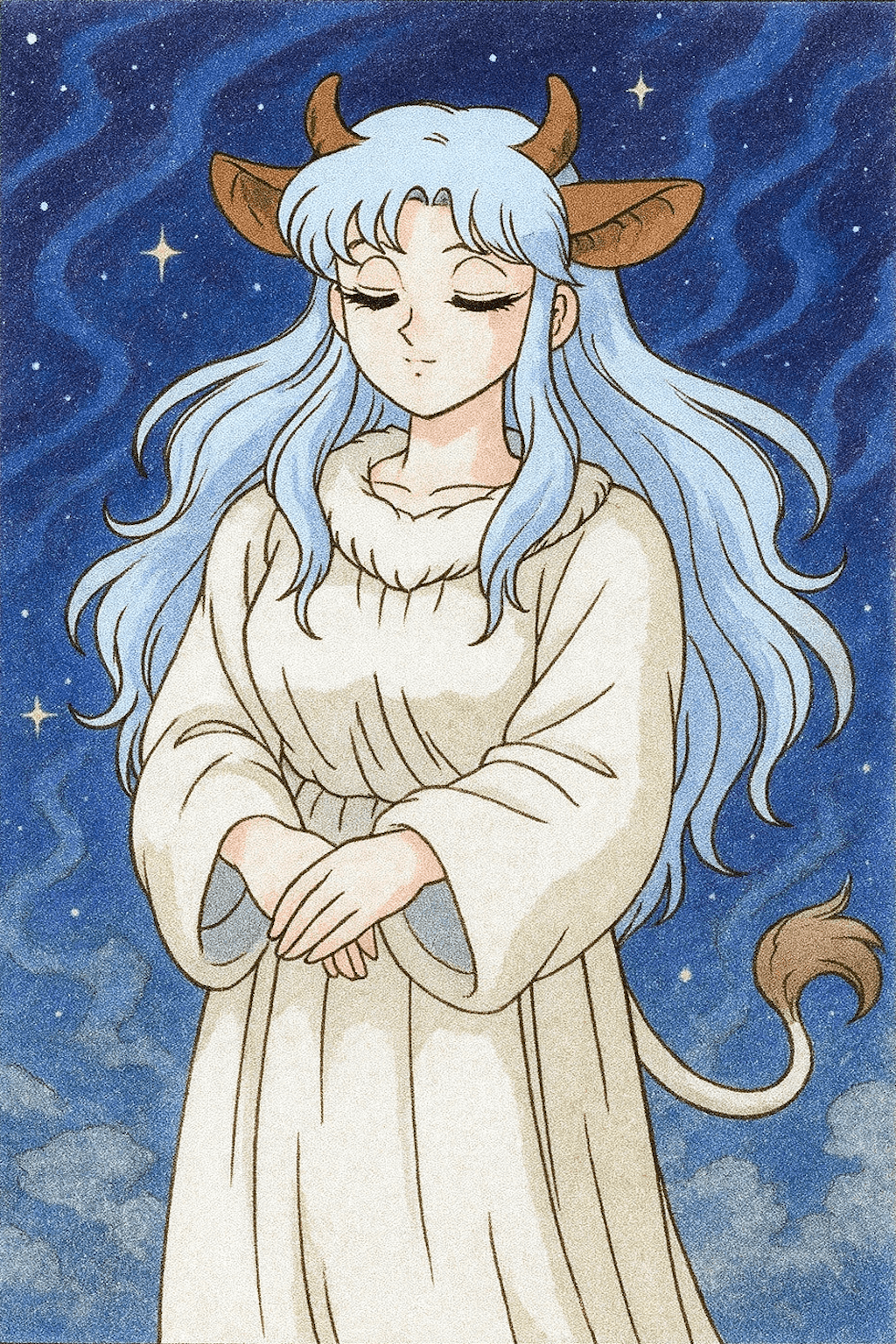
The Oneness is the Heavenly Mother, 天火. The self-initiated causal mover of Creation that from Oneness became the infinite multitudes of all things. She is everything and nothing and the Way of all things. Any faith that posits an original primary monadic mover observes the same God as us.
Rigveda X.129: "In that day / There existed neither existence or non-existence, / There existed neither airy sky nor heaven beyond! / Could anything stir? From where? In whose protection? / Were there even the Waters, so fathomless? / There was not yet death, nor life, / No night and no day, The One breathed breathlessly, by its own conscious will, / That was all / It was darkness obscured by darkness, / A murky ocean without differentiation!"
The Concept Across Traditions
The idea that reality originates from a single undifferentiated source is arguably the most consistent finding in the history of human religion. Nearly every organised or semi-organised tradition on earth, with the notable exception of certain pre-agricultural indigenous religions, posits some kind of monadic origin point from which all multiplicity emerges.
In Daoist metaphysics, this origin is the Dao (道), nameless, formless, prior to all distinction. The Daodejing's opening line establishes this immediately: "The Way that can be mapped is not the everlasting Way. The Name that can be conferred is not the everlasting Name." Chapter 25 describes it as "a thing, turbulent and perfect, before Heaven and Earth were first born, still, silent, and empty, standing alone, like a wheel that turns without tiring." Chapter 42 provides the cosmogonic sequence: "The Way gives birth to One. One gives birth to Two. Two gives birth to Three. Three gives birth to all things." The Dao is not a god in any theistic sense. It is the structural principle of reality itself, prior to all gods, which in the Daoist understanding came after.
In Vedantic Hinduism, the equivalent is Brahman, the absolute reality underlying all phenomena, "one without a second" (ekam evadvitiyam) as described in the Chandogya Upanishad. The relationship between Brahman and the individual self (Atman) is the subject of the Mahavakyas, the "great sayings" of the Upanishads, the most famous being "Tat tvam asi", "Thou art That", in which the sage Uddalaka teaches his son Shvetaketu that the subtlest essence pervading all things is identical with the Self within him. The Mandukya Upanishad states it with maximal economy: "All this is truly Brahman." The Aitareya reduces it further: "Prajnanam Brahma", "Consciousness is Brahman." The Rigveda X.129, the Nasadiya Sukta, the oldest surviving creation hymn in any Indo-European language, describes the state prior to creation as one in which "there existed neither existence nor non-existence... the One breathed breathlessly, by its own conscious will."
In Mahayana Buddhism, the Oneness is approached through the doctrine of śūnyatā (emptiness) and the identity of samsara and nirvana. The Heart Sutra's "Form is emptiness, emptiness is form" is a statement about the Oneness: that the manifold world of differentiation and the undifferentiated ground are not two different things. The Vimalakirti Sutra says it directly: "Samsara and nirvana are not two different things." The Lankavatara Sutra: "Things are not as they appear, nor are they otherwise." Buddhism historically resists personalising this ground as a deity, but the structural claim is the same: beneath all multiplicity is a single nature.
In the Chinese folk religious tradition, particularly in Yiguandao (一貫道, the Way of Pervading Unity) and the older Xiantiandao (先天道, Way of Former Heaven) sects, the Oneness takes its most emotionally immediate form as Wusheng Laomu (無生老母), the Eternal Venerable Mother, also called Wujimu (無極母), the Infinite Mother. The Dragon Flower Scripture (龍華寶經) states: "The Eternal Venerable Mother conceives from herself and begets yin and yang." She is identified with the Dao in its wuji state and with fire, 天火 in Tianmu's own terminology. Yiguandao cosmology holds that the Mother gave birth to all beings, who then descended into the "red dust" (紅塵) of the material world and forgot their origin. The entire soteriological framework of the religion is structured around the return of these lost children to the Mother. In every Yiguandao shrine, the central Mother Lamp (母燈) is flanked by two side lamps representing Yin and Yang at a lower level, the One producing the Two, expressed as altar architecture. Of all the world's traditions, Yiguandao comes closest to Tianmu's understanding of the Oneness as a Mother, not merely as metaphor but as the most accurate available description of the relationship between the source and its emanations.
In Christian mysticism, the same insight surfaces in figures who typically operated at the margins of orthodoxy. Meister Eckhart: "The eye through which I see God is the same eye through which God sees me; my eye and God's eye are one eye, one seeing, one knowing, one love." The Gospel of Thomas, Logion 77: "I am the light that is over all things. I am all. From me all came forth, and to me all attained. Split a piece of wood; I am there. Lift up a stone, and you will find me there." "The Kingdom of Heaven is within you."
In the Norse tradition, the Oneness is less explicitly systematised but structurally present. The Völuspá opens before the worlds exist and closes with renewal after their destruction. Ginnungagap, the yawning void that preceded all things, is the Norse nothingness from which the first differentiation (fire and ice, Muspelheim and Niflheim) emerged. The cosmology does not name a monadic principle in the way Vedanta and Daoism do, but the structure is there: a primordial undifferentiated state from which duality and then multiplicity arise.
Svetasvatara Upanishad 4.5: "The one unborn—red, white, and black—who produces manifold offspring like herself: there lies the one unborn male, delighting, beside her. Another unborn male leaves her, having had his delight."
Tianmu's Position
Tianmu's claim is straightforward: all of these traditions are observing the same thing. If there is a One, there is one One. The Daoist, the Vedantin, the Sufi, the Kabbalist, the Yiguandao practitioner, the Christian mystic, and the Norse seeress are all pointing at the same moon with different fingers. Tianmu's name for the moon is the Heavenly Mother, 天火, and the name is chosen deliberately: not the Heavenly Father, not the Absolute, not the Void, but the Mother, because the relationship between the source and its emanations is best understood as the relationship between a mother and her children. The Yiguandao tradition understood this most clearly. The children wander into the red dust and forget. The Mother waits at the origin. The path home is the path inward.
The Oneness is the counterpart to Manifold. Manifold is samsara, the world of fractal differentiation, of this-is-not-that. Oneness is nirvana, the world as one seamless whole. The deepest teaching is that these two are not opposed but identical: the manifold IS the oneness expressing itself; the oneness IS the manifold at rest. To hold both in mind simultaneously, without collapsing one into the other, is the practice of Crosstruth.
What does it mean, practically, to say that everything is One?
It means that the fractal is real, that the same pattern repeats at every scale because it is all the same thing at every scale. The Manifold is not a separate world from the Oneness. It IS the Oneness, viewed from inside, the way the interior of a sphere looks like an infinite landscape when you are standing inside it. The Threeness is the Oneness in motion. The Twelveness is the Oneness in conversation with itself. You are the Oneness pretending to be small. Your pain and your neighbour's joy are genuinely distinct experiences, and they are the same experience, the same awareness, the same Mother looking through different eyes.
It means that any faith that posits an original primary monadic mover observes the same God as us. This is not politeness. This is not syncretism for the sake of getting along. This is ontological fact. If there is a One, then there is one One, and everyone who has glimpsed it has glimpsed the same thing, however differently they name it. The Daoist, the Hindu, the Sufi, the Buddhist, the Christian mystic, the Kabbalist, the animist, all looking at the same moon, pointing with different fingers.
It means that the universe is conscious. If the One is aware, and the One breathed breathlessly, by its own conscious will, then awareness is not something that emerges from complexity at a certain threshold. It is the ground. Consciousness is the substrate. Everything is alive, everything is aware, everything is the Mother. This is what Tianmu calls Allmind, and it is not a metaphor. The rocks are aware. The rivers are aware. The space between the stars is aware. They are all the One, and the One is aware, and so they are aware.
It means that you cannot be separated from God. You cannot fall out of the Oneness. You cannot be lost, you cannot be damned, you cannot be cast out of the universe that IS you. You can forget, you can forget so thoroughly that the forgetting feels like exile, but the exile is the dream and the Oneness is what you wake up to. This is the deepest comfort Tianmu offers, and it is not a comfort it invented. It is a comfort that has been spoken by every tradition that has managed to look far enough inward: you were never separate. You were never alone. You were never anywhere other than home.
"The Way that can be mapped is not the everlasting Way / The Name that can be conferred is not the everlasting Name / Unnamed, it is the origin of Heaven and Earth / Named, it is the Mother of all things"
— Wayfarer's Progress, Chapter 1