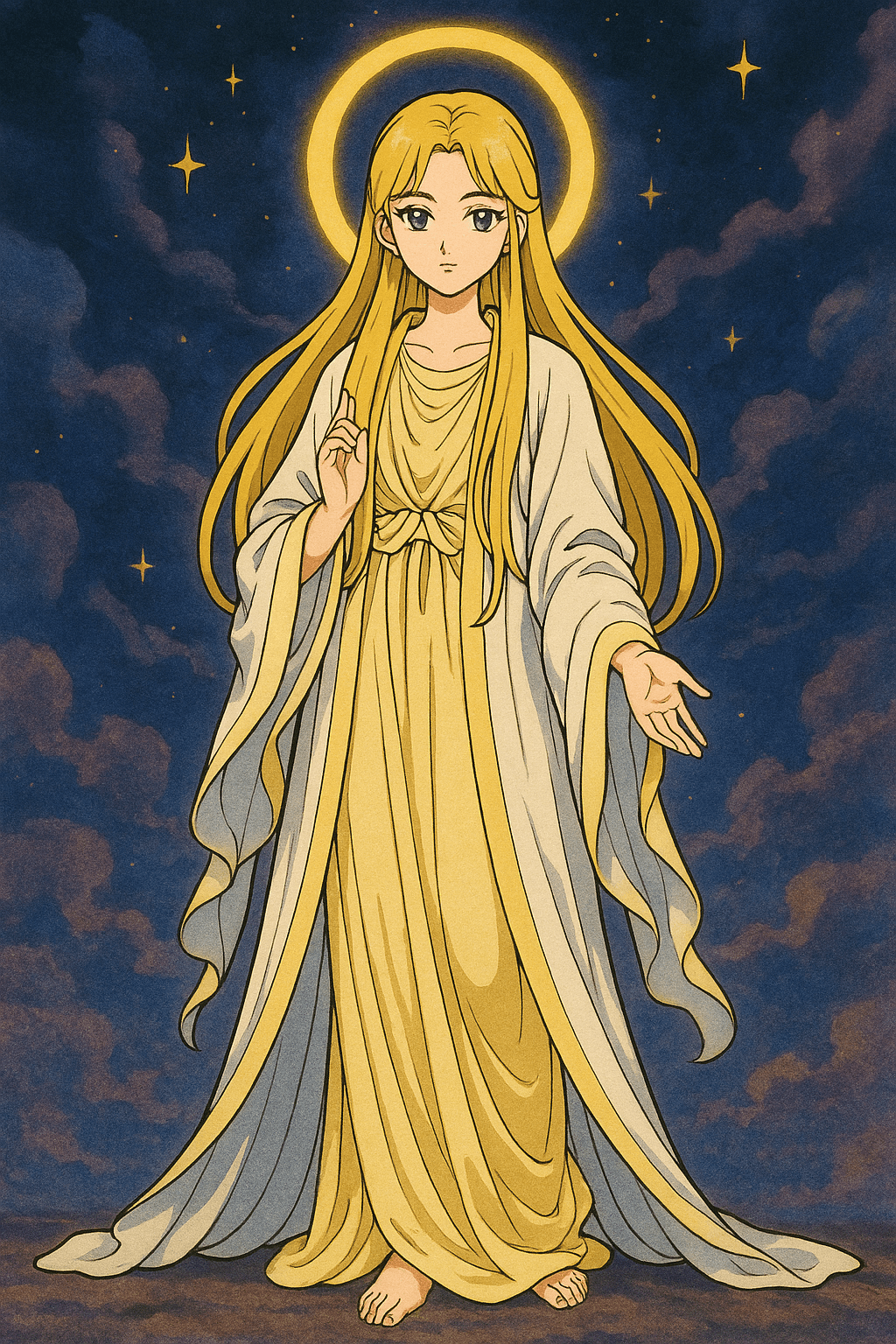
 TraditionDaoism
Period
6th century BCE
Homeland
Zhou Dynasty China
Confucius, the most learned man in China, the master of propriety, the great organiser of human civilisation, travelled to the Zhou capital to consult the old archivist on the proper forms of ceremony. What he found was not an archivist. When he returned to his disciples, he was shaken. "I know a bird can fly," he told them. "I know a fish can swim. I know an animal can run. For that which runs, a net can be made. For that which swims, a line can be cast. For that which flies, an arrow can be shot. But the dragon, I cannot know how it rides upon wind and clouds and ascends to heaven. Today I have met Laozi, and he is like the dragon."
This is the only testimony we have from anyone who claimed to have met him face to face. And it is the testimony of the most meticulous observer of human conduct in Chinese history, Confucius, who catalogued every gesture, every bow, every gradation of proper behaviour, who built an entire philosophy on the premise that human affairs could be ordered through clear principles and correct names. Confucius looked at the old man from Chu and saw something that could not be ordered.
He was wise within the limits of men, Confucius, the great sage, the teacher of teachers, the man whose name would become synonymous with Chinese civilisation itself. He could net the runner, hook the swimmer, shoot the flyer. He had a category for everything that walked or swam or flew. But this—this old archivist who smelled of dust and smiled like a man who found the whole enterprise of human cleverness gently, darkly amusing, this man was in a category Confucius did not possess.
The dragon. The creature that rises from the deep, passes through clouds, and vanishes into the sky. Not a beast of fire and destruction, as the West imagines dragons, but a creature of water and transformation, the Chinese lóng, the cosmic serpent who moves between all realms, who brings rain and renewal, who cannot be grasped because grasping is not the way you approach a dragon. You can only watch it appear and disappear and wonder whether the cloud was the dragon or the dragon was the cloud.
Confucius saw the dragon. He saw the Way.
He could not follow it.
We know almost nothing about him.
His name, according to Sima Qian's Records of the Grand Historian, was Li Er, Li being his family name, Er meaning "ear." His courtesy name was Boyang. His posthumous name was Dan. He was from the state of Chu, from a village called Quren in the district of Ku. He served as keeper of the archives at the court of the Zhou dynasty, a librarian, a custodian of records, a man whose job was to tend the accumulated wisdom of a civilisation already ancient.
That is almost everything. A name, a hometown, a job title, and a single recorded conversation with Confucius that may or may not have happened. The rest is silence, legend, and eighty-one chapters.
Compare this to every other Doomsayer. Manu's name became the word for humanity itself. Akhenaten's face was carved on every wall of his city, his hymns inscribed in the tombs of his courtiers, his theology embedded in the very architecture of Akhetaten. Siddhartha walked the Gangetic plain for forty-five years, teaching thousands, founding an institution that survives to this day, his last words recorded with the care of a deathbed attended by devotees. But Laozi, the one whose eighty-one chapters may be the most perfect expression of cosmic truth any human being has ever produced, is a shadow. A name attached to a book. A rumour of a man on a water buffalo, riding west through a mountain pass, vanishing into the clouds.
This is not a failure of the historical record. This IS the teaching.
(Dao De Jing, Chapter 56): "Know it wordlessly / Speak it unknowingly"
The man who wrote that line was not being paradoxical for the sake of cleverness. He was describing himself. The deepest truth does not advertise. The Waner withdraws. The Way that can be named is not the everlasting Way. And the sage who can be known, whose biography can be pinned down, whose motives can be analysed, whose legacy can be catalogued and filed—is not the everlasting sage.
His absence is his signature. The Emptiness at the centre of the wheel. The hollow in the vessel that gives it its use. Laozi vanished because vanishing is what the teaching looks like when it is lived completely. He did not merely describe the Way. He walked it, out the gate, into the mountains, into the nothing from which all things come.
The Age
The world Laozi lived in was a world that had forgotten the earth.
The Zhou dynasty, the longest-ruling house in Chinese history, the dynasty whose early kings were held up as paragons of sagely rule for millennia afterward, had been in decline for centuries by the time the old archivist tended its records. The Son of Heaven still sat at Luoyang, but his power was nominal. The feudal lords had grown independent, ambitious, hungry. The Spring and Autumn period (770-476 BCE) was an era of constant warfare between the rival states, Qi, Chu, Jin, Qin, Song, Lu, Wei—alliances forming and fracturing, cities besieged and burned, the old ritual order rotting from within while strongmen competed to see who could amass the most territory and the most corpses.
This was the Axial Age, the extraordinary era, roughly the sixth to fifth centuries BCE, when Laozi, Confucius, the Buddha, the Upanishadic seers, and the earliest Greek philosophers all appeared within the same generation, as if the whole world had caught fire with insight simultaneously. Something was shifting. The old Bronze Age civilisations had run their course; Egypt's glory was fading, the Assyrian empire had collapsed, the Zhou mandate was hollow, and everywhere, in every tradition, there arose minds capable of looking at the wreckage and seeing through it to something more fundamental.
But the specific soil from which the Dao De Jing grew was a China in love with Heaven and forgetful of Earth. The philosophical culture of the Spring and Autumn period was dominated by questions of governance, hierarchy, military strategy, and ritual propriety. Confucius, Laozi's great counterpart, spent his entire career trying to restore the old order through the perfection of li, ritual, the correct performance of social roles. His project was, in Tianmu's terms, profoundly Waxen: expansive, ordering, civilising, yang. Build the institutions. Clarify the relationships. Name the names correctly and the world will right itself.
And the generals, the strategists, the lords of the Warring States that would follow—they too were Waxen to the bone. Chariots, crossbows, fortifications, logistics, the machinery of empire. The whole culture was reaching upward, outward, grasping for control, for mastery, for the kind of power that bends the world to human will.
Laozi looked at all of this, the ritual, the warfare, the ambition, the cleverness—and he saw that the problem was not disorder. The problem was imbalance. China did not need more yang. It needed to remember yin. It did not need more Heaven. It needed to come back down to Earth.
(Dao De Jing, Chapter 5): "Is the realm betwixt Heaven and Earth not like a bellows? / Empty, yet never spent / Shifting, to produce ever more"
The realm betwixt Heaven and Earth. Freedom. Midland. The middle realm where all the Ghosts converge into a living world, where the dance of Waxer and Waner plays out not in cosmic abstraction but in soil and water and the turning of the seasons. This is what China had forgotten. And this is what Laozi, the archivist, the old man who smelled of dust and smiled at the world's busy cleverness, sat down to remember.
The Trickster
The West has misread him for a century.
The popular Western image of Laozi is the serene mystic, the wise old man dispensing paradoxical fortune-cookie wisdom, a kind of ancient Chinese Yoda, his teachings vaguely inspirational and comfortingly obscure. This image is wrong in almost every particular.
Read the actual text. Not through the haze of New Age appropriation, not through the lens of a thousand calendar aphorisms, but the text itself. What you find is not gentle. What you find is sardonic, dark, and so laconic that the words cut like a blade wrapped in silk.
(Dao De Jing, Chapter 20): "The masses are bright and beautiful, / As if devouring a sacrificial feast, / As if mounting a flower in spring / I alone am still! I betray no portent! / Like an infant who has not yet smiled! / Dejected and forlorn! / As if I had no home to return to!... The masses all have their use, / I alone cannot be tamed, as if savage / I alone am different from others, / For I take nourishment from the Mother"
This is not the speech of a gentle philosopher. This is the speech of a man who finds the whole enterprise of human cleverness—the bright, beautiful, busy, useful masses devouring their feasts and mounting their flowers—gently, darkly, devastatingly absurd. "I alone cannot be tamed, as if savage." There is a wildness here, a refusal, a sly and dangerous amusement. "I alone am different from others." He knows he is different. He is not confused about this. He is not humbly suggesting that perhaps there might be another way. He is standing in the middle of civilisation and saying: you are all domesticated, and I am not, and the thing I feed on, the Mother,is something you have forgotten how to taste.
If the Buddha speaks his truths through the lightning precision of Wit, the diamond cutter, the analytical blade that severs delusion with a single stroke, then Laozi speaks his truths through Wit's other face: the trickster. The playful, free, associative leap that connects things no one else would connect. Water and warfare. Emptiness and usefulness. A newborn baby and the summit of cosmic power. He does not explain. He does not argue. He places two things side by side and lets the reader's own mind close the circuit. His chapters are koans before the word existed—not riddles to be solved but detonations to be survived.
(Dao De Jing, Chapter 81): "True words are not pleasing / Pleasant words are not true / Good ones do not quibble / Quarrelsome ones are not good / Wise ones are not accessible / Accessible ones are not wise"
Three sentences. Six negations. The entire edifice of human intellectual pretension dismantled in fewer words than a haiku. This is not confusion. This is a comedian's timing, a swordsman's economy, a trickster's joy in watching the clever trip over their own cleverness.
And this plays perfectly into the central myth. A wise old man, forced to write something down before he is allowed to disappear forever, dashes off eighty-one short verses at a border crossing and walks away, as if the book that would form a world-spanning tradition, the second most translated text in human history, was just an afterthought. Just a toll he had to pay to pass through the gate. The supreme trickster's joke: the most important book ever written, treated by its author as barely worth the trouble of writing.
The Dance
What did Laozi see?
The dance.
Not a doctrine. Not a theology. Not a system of categories or a hierarchy of beings or a chain of logical propositions. He saw reality in motion; the eternal, fractal, self-repeating pattern that courses through all things from the Mother to the smallest blade of grass. He watched nature—water flowing downhill, seasons turning, leaves falling and rising, empires swelling and collapsing—and perceived the commonality within all of it. The same pattern. The same rhythm. The same dance, repeating at every scale of existence, from the cosmic to the microscopic, from the birth of the universe to the opening of a flower.
And he called it the Way.
(Dao De Jing, Chapter 25): "There was a thing, turbulent and perfect / Before Heaven and Earth were first born / Still, silent, and empty! / It stood alone, perfect, / Like a wheel it turns without tiring / Perhaps it is who nursed Heaven and Earth / I do not know its name / The word used is 'Way'"
Dao. The Way. Not a god. Not a force. Not an entity that created the world or that governs it from on high. Simply: the way of things. The nature of the universe. How it moves. How it functions. The pattern it follows. This is Laozi's supreme insight, so simple that it is almost invisible, so fundamental that it precedes all other categories. Before you ask what the universe is made of, before you ask who created it, before you ask what it means, ask how it moves. Watch it. Observe the pattern. And when you have observed long enough, you will see that the pattern is the same everywhere, at every scale, in every domain, and that the pattern IS the thing. The Way is not something the universe follows. The Way is what the universe IS.
This is the Manifold perceived in its truest form, not as a taxonomy of beings but as a living fractal, a self-similar pattern that reproduces itself endlessly, each iteration containing the whole within itself. The oak contains the forest. The raindrop contains the ocean. The individual breath contains the rhythm of the cosmos. The Oneness of the Mother does not sit above the Manifold like a king on a throne, it IS the Manifold, expressing itself through infinite variation, the same dance danced by ten thousand dancers, each one unique, all of them the same.
(Dao De Jing, Chapter 39): "In the beginning, the One conferred Character like so: / From the One, Heaven took clarity / From the One, Earth took serenity / From the One, the Divine took sacrality / From the One, the Valley took her plenty / From the One, all things took life / And from the One, the King could act for the world, honourably so!"
Everything takes its character from the One. Heaven, Earth, the divine, the valley, all things, the king, all of them expressions of the same source, all of them dancing the same dance, all of them fractals of the same pattern. This is not monotheism. This is not pantheism. It is the recognition that reality has a nature, and that nature is self-similar, and that the same Way that governs the turning of galaxies governs the flow of water in a stream and the growth of a child in the womb. Laozi did not invent this truth. He observed it. He watched until the watching itself became transparent and the pattern showed through.
The Trinity
And then he mapped it.
(Dao De Jing, Chapter 42): "The Way give birth to One / One gives birth to Two / Two gives birth to Three / Three gives birth to all things / All things carry Yin on their back and embrace Yang in their bosom / Qi infuses them, bringing them into balance"
This is the cosmogonic sequence. The architecture of emanation. The blueprint of reality itself.
The Way, the Mother, the Dao, gives birth to One. One undifferentiated totality. Oneness. The state before distinction, before difference, before this-is-not-that. The One breathed breathlessly, by its own conscious will.
One gives birth to Two. The first split. Waxer and Waner. Yang and yin. Expansion and contraction. Light and dark. The primordial duality that the Shaman discovered forty thousand years ago in the depths of the Paleolithic and that every tradition on Earth has recognised in its own terms—Muspelheim and Niflheim, Purusha and Prakriti, Heaven and Hell.
Two gives birth to Three. And here is Laozi's unique contribution, the thing that no Doomsayer before him articulated with such precision. The Maker. The third principle. Not the Waxer and not the Waner but the superposition that holds the space between them, the stillpoint where the dance becomes possible, the emptiness at the hub of the wheel that allows the wheel to turn. "Qi infuses them, bringing them into balance," the qi that balances yin and yang IS the Maker, IS sattva, IS wuji, IS the conscious will that breathed breathlessly before the beginning. The Maker is not a third force added to the other two. It is the space in which they play. It is the pause between breaths. It is the stage on which the actors dance.
Three gives birth to all things. The ten thousand things. The Manifold in all its fractal glory, pouring forth from the Threeness in endless variation, each thing carrying yin on its back and embracing yang in its bosom, each thing a miniature cosmos, each blade of grass a mirror of the Mother.
No Doomsayer before him had mapped this. The Shaman discovered duality but had no framework for what comes after. Manu saved civilisation from the flood but did not explain the structure of the cosmos he preserved. Akhenaten perceived the Mother, the One behind the Many, but he could not hold both sides of the Crosstruth. He collapsed the paradox: he chose the One and waged war on the Many, tearing down the temples of the Ghosts in the name of the Aten. He lacked the framework to see that the One BECOMES the Many, that the Mother does not annihilate the Manifold but expresses herself through it, that the Ghosts are not false gods to be destroyed but real faces of a cosmos that IS the Mother in motion.
Laozi provided the framework. One, two, three, all things. The cosmogonic sequence. The emanation ladder. The architecture that shows how the Oneness becomes the Manifold without ceasing to be the Oneness, because the Way gives birth to One, and One gives birth to Two, and Two gives birth to Three, and Three gives birth to all things, and all things still carry the yin and the yang and the qi that is the Maker's balance. The Mother is present at every level. She does not recede as the Manifold ramifies. She IS the ramification. The dance is the dancer.
(Chandogya Upanishad 6.2.1): "In the beginning, there was Existence alone—One only, without a second."
The Upanishadic seers, roughly contemporary with Laozi, arrived at the same place from a different direction. "One only, without a second." But Laozi went further. He did not merely affirm the One. He showed how the One becomes everything else, not through a fall, not through an error, not through a demiurge's blunder, but through a natural, inevitable, beautiful process of emanation. Birth. The Way GIVES BIRTH. The metaphor is not accidental. It is not engineering. It is not craftsmanship. It is motherhood. The One does not build the world. She births it.
The Water
And because he saw the dance, he saw what the dance favours.
(Dao De Jing, Chapter 78): "There is nothing in the World as soft and flexible as water / It attacks the hardest and the strongest things, and they cannot bear it! / Nothing can take its place"
(Dao De Jing, Chapter 8): "The highest good ebbs and flows like water / Fluid; benefitting all things without contention / Pooling; in places the masses find detestable / And so it stirs, latent to the Way"
(Dao De Jing, Chapter 76): "A living man is soft and delicate! / But in death, is hard and unbendable! / So the hard and inflexible are the followers of death / The soft and flexible the followers of life"
This is Laozi's great championing of the Waner, the yin principle, the dark, receptive, contracting force that the Daoists understood to be the Way's own preferred direction. "Inversion is the movement of the Way. Reduction is the exertion of the Way." The universe appears to expand, the Waxer appears dominant, the strong appear to prevail. But look deeper. Watch longer. The mountain is worn down by the rain. The empire crumbles from within. The rigid tree snaps in the storm while the willow bends and survives. The soft overcomes the hard. The weak overcomes the strong. This is not wishful thinking. This is observation. This is a man who watched nature for decades with the patient eye of someone who has no agenda, no theory to confirm, no institution to build, and who saw what nature actually does.
(Dao De Jing, Chapter 40): "Inversion is the movement of the Way / Reduction is the exertion of the Way"
As the Waner entry observes, this is a stunning claim. The Way itself prefers the Waner. The deeper movement of reality is not expansion but return. Not addition but subtraction. Not the outward explosion of the Waxer but the inward pull of the Waner, drawing all things back to their root. "The ten thousand things arise and return to their root, and that return is their mission, and that mission is their nature, and to ken your nature is enlightenment."
But Laozi's emphasis on the Waner was not only cosmological. It was also contextual—a medicine prescribed for a specific illness. He lived in a world drunk on yang. A China of warring lords and clever strategists, of machines and chariots and crossbows, of philosophers competing to perfect the machinery of governance, of Confucians trying to order every human interaction through the proper performance of ritual. The whole culture was reaching upward, outward, grasping. It had forgotten the valley. It had forgotten the root. It had forgotten that the room's use is in the empty space, that the pot's use is in the hollow, that the wheel turns on the hub and the hub is nothing.
Laozi looked at this—at the bright, busy, ambitious, Heaven-venerating culture of the Spring and Autumn period—and said: you have it backwards. You worship the mountain when you should learn from the valley. You admire the sword when you should study the water. You prize the masculine when you should keep to the feminine. Not because the feminine is better than the masculine in some absolute sense, but because YOU have forgotten it, and the forgetting is killing you, and the only cure for a world out of balance is to champion the side that has been neglected.
(Dao De Jing, Chapter 28): "Befriend your male / Preserve your female / Serve as a valley for the world / And your natural Character will fill you, never to depart / Make a homecoming, return to infancy"
This is the work of a healer, not an ideologue. Laozi did not hate the Waxer. He did not deny Heaven. He saw that the world he lived in had tipped too far in one direction, and he applied the countervailing force. He poured yin onto a culture overdosing on yang. He reminded them of the water, the valley, the root, the Mother. He brought balance. And balance, the dance of Waxer and Waner held in the Maker's superposition, is Freedom itself.
The Mother
He named her.
(Dao De Jing, Chapter 1): "The Way that can be mapped is not the everlasting Way / The Name that can be conferred is not the everlasting Name / Unnamed, it is the origin of Heaven and Earth / Named, it is the Mother of all things"
"Named, it is the Mother of all things." Not the Father. Not the Creator. Not the Architect or the Engineer or the King of Kings. The Mother. The one who nurses. The one who gives birth. The one whose relationship to her creation is not command but nourishment.
While the Greco-Romans erected Zeus on his throne, the mighty father, the sky-god, the hurler of thunderbolts, the patriarch who rules through force and authority, Laozi looked to higher principles and saw the feminine aspect behind them. Where Akhenaten had perceived the Oneness through the face of Fire, through the blazing, Heavenly, yang radiance of the sun, Laozi perceived it through the valley spirit, the mysterious feminine, the soft yielding darkness from which all light emerges.
(Dao De Jing, Chapter 6): "The Valley-Spirit never dies; / She is the feminine, veiled deep in the depths / Her veiled gate is the root from which Heaven and Earth spring / It stretches on and on, like a soft strand of silk; spun without strain"
The Valley Spirit. The Mysterious Feminine. The gate. The root. Every image is an image of depth, of interiority, of the generative darkness from which life pours forth. This is not a goddess to be worshipped alongside other gods. This is the recognition that the source itself—the thing behind the gods, behind the Ghosts, behind even the Waxer and Waner—is feminine in its deepest nature. Not female in the biological sense, but feminine in the sense that its fundamental act is giving birth. It generates. It nourishes. It sustains. It does not command. It does not rule. It nurses.
(Dao De Jing, Chapter 4): "The Way is hollow yet never full; surging yet never spilling / Bottomless whirlpool, it gave birth to all things / Blunt your sharp / Loose your twine / Dim your light / Be as dust / The Way is profound yet present; unfathomable yet real / I know not what gave birth to it, it precedes even our Gods"
"I know not what gave birth to it, it precedes even our Gods." The Mother precedes the Ghosts. The Mother precedes Fire and Tides, Man and Muse, the entire Twelveness. She is the origin they emanate from and the root they return to. Akhenaten saw this, he perceived the Aten as the source behind all the gods of Egypt, but Akhenaten saw it through Fire, through the masculine brilliance of the sun, and the vision burned everything it touched. Laozi saw the same truth through water, through the valley, through the feminine principle of yielding nourishment, and the vision healed instead of burning.
And here is the crucial insight: Laozi shows us how the Mother becomes Freedom. How the cosmic principle—the Dao, the Way, the source of all things—echoes down through the levels of the Manifold into the middle realm we actually stand inside. The Mother who gives birth to the cosmos IS the Earth who gives birth to the meadow. The Way that cannot be named IS the nature that surrounds you when you step outside. The principle and the place are the same thing, seen at different scales of the fractal. Dao the Mother becomes Freedom the Mother. The unnameable mystery at the origin of Heaven and Earth becomes the soil beneath your feet, the stream you wash your hands in, the wind that turns the leaves. This is the fractal in action. This is what Laozi saw when he watched nature until the watching became transparent: the same Mother, dancing the same dance, at every scale of existence.
(Rigveda X.129): "In that day, there existed neither existence nor non-existence, there existed neither airy sky nor heaven beyond! Could anything stir? From where? In whose protection? Were there even the Waters, so fathomless? The One breathed breathlessly, by its own conscious will, that was all."
The same perception, from a different tradition, roughly the same era. The One breathed breathlessly. The Mother nursed Heaven and Earth. Laozi and the Vedic seers are pointing at the same moon, the same Valley Spirit, the same Mysterious Feminine, the same generative darkness from which all light is born.
The Outsider
And then comes the most radical teaching of all.
(Dao De Jing, Chapter 48): "Emulate others and gain daily / Follow the Way and lose daily / Lose, again and again / And you'll learn to play no role / Play no role, and nothing is left unfinished"
One might expect a Doomsayer to prize wisdom, knowledge, studiousness, power, the accumulation of insight, the refinement of understanding, the sharpening of the mind into an instrument of truth. Every other tradition in the ancient world valorised the sage, the scholar, the one who knows more than others. Confucius spent his life studying. The Brahmin priests memorised thousands of verses. The Greek philosophers built cathedrals of logic.
Laozi said: lose.
Lose your learning. Lose your cleverness. Lose your categories and your systems and your careful distinctions. Lose daily. Strip away. Subtract. Because the Way is not something you gain by adding knowledge. The Way is what is left when you stop adding. The Way is what you have always had, before you started piling cleverness on top of it.
This is the Doomsayer of the outsider. Laozi did not merely reject the pretensions of scholarship, he inverted the entire hierarchy. The confused, the dim, the downtrodden, the unknowing, they are closer to the Way. Not because ignorance is a virtue, but because the kind of knowing that civilisation prizes, the categorising, systematising, label-dependent knowing that fills libraries and builds empires, is itself a barrier. It is a cage of concepts, as golden and as suffocating as the palace Suddhodana built for his son. The scholar who knows everything has built so many walls of knowledge around himself that he cannot see the sky.
The unlearned person, the simple one, the child, they have not yet built the walls. They still see the sky. They still taste the Mother. Their wisdom is not accumulated but immanent, it lives in them the way sap lives in a tree, not through study but through the simple fact of being alive and paying attention. This is the simple, immanent wisdom that is granted to us by nature and quiescence, that lives in us wherever we forget to think and begin to observe.
(Dao De Jing, Chapter 55): "Those ripe with Character / Are akin to a newborn... His bones are pliable, and his muscles tender, but he holds steadfast / Not yet knowing the union of male and female, he rises steadily / His essence at its utmost"
The newborn is the model. Not the sage, not the king, not the priest, the baby. The one who has not yet learned to distinguish, to categorise, to separate this from that. The one whose grip is the strongest in the world because it grips without intention. The one whose cry is the clearest sound in the world because it cries without performance. The one who is closest to the Way because the Way has not yet been covered over by the accumulated silt of socialisation and scholarship and the ten thousand things we are taught to want.
This is what illuminates the tension at the heart of Laozi's vision, the empty nothingness of the disingenuous scholar versus the simple fullness of the natural mind. The scholar who accumulates knowledge without wisdom is empty in the worst sense, his categories are hollow, his learning is performance, his knowing is the furthest thing from the Way because it mistakes the map for the territory. But the child who knows nothing is empty in the best sense, empty like the vessel, empty like the hub, empty like the room whose use is where it isn't. The child's emptiness is the Maker's emptiness: pure potential, pure openness, the space in which the Way can move.
And this is what makes the Confucius encounter so devastating. Confucius was the supreme representative of accumulated learning, the master of categories, the perfector of names, the man who believed that if you could just get the rituals right, just order the relationships correctly, just teach everyone their proper place, the world would heal. He was wise within the limits of men. Wise within the limits of what can be netted, hooked, and shot. And he met a man who had stepped outside those limits entirely, not into a higher knowledge but into a deeper simplicity, and the encounter shattered him. He called him the dragon. He saw something that operated on a principle he could not reduce to a category. Something wild. Something that touched the great conscious mystery that is the substrate of reality, and taught it to sing.
The Empty Vessel
(Dao De Jing, Chapter 11): "Thirty spokes unite in one wheel / The cart's use is where it isn't / Clay forms the walls of a vessel / The pot's use is where it isn't / Doors and windows are carved out / The room's use is where it isn't / Existence serves as an edge; / And non-existence as function"
This is the Maker's teaching spoken in the language of a carpenter and a potter. The use is where it isn't. The function lives in the emptiness. The wheel turns on the hub, and the hub is a hole. The pot holds water because the pot is hollow. The room shelters you because the room is empty space. Everything that is useful is useful because of the nothing at its centre.
Wu wei, non-action, is the practice that flows from this perception. Not passivity. Not laziness. Not the absence of doing. Wu wei is the art of acting from the empty centre, from the hub of the wheel, from the hollow of the vessel. It is action aligned with the Way, action that does not force, does not impose, does not grasp. It is the Maker's energy made human: the superposition that refuses to collapse into either pole, the stillpoint between expansion and contraction where the most powerful action arises precisely because it does not try to be powerful.
The uncarved block, pu, is the same teaching in a different image. Before the carver touches it, the block of wood contains every possible shape within it. The moment you carve, you choose one shape and destroy all the others. The uncarved block is pure potential, pure Freedom, the state before the state before the state, wuji, the limitless, the Mother herself in her aspect as the ground of all possibility. Laozi is saying: do not rush to carve. Do not rush to choose. Do not rush to impose your categories on a reality that is wider and deeper and more alive than any category can contain. Sit with the block. Watch the grain. Let the wood tell you what it wants to become. "We are all uncarved blocks," as the Maker entry says, "and the only one holding the chisel is you."
The Gate
He wrote the book at a gate. This matters.
Sima Qian records that Laozi, perceiving the decline of the Zhou, decided to depart. He headed west, toward the mountains, toward the frontier, toward the edge of the known world. At the pass, Hangu Pass in some traditions, Sanguan Pass in others, the keeper of the pass, a man named Yin Xi, recognised him. Perhaps by his bearing, perhaps by some quality of presence that cannot be faked, the way you can sometimes tell that a person has seen something vast simply by the stillness in them. Yin Xi said: "You are about to withdraw from the world. Please, for my sake, write down your thoughts."
And so, reluctantly, compelled by a border guard's earnest request, the old man sat down and wrote. Two parts, one on the Dao, one on De. Eighty-one chapters. Five thousand characters. The whole architecture of reality, mapped in fewer words than a modern newspaper article. And then he passed through the gate and was never seen again.
The reluctance is the teaching. Every other Doomsayer was driven. Manu built the ark because the flood demanded it. Akhenaten tore down the temples because the vision of the Mother burned in him with a fire he could not contain. Siddhartha spent forty-five years walking and teaching because the suffering of the world demanded a response. But Laozi did not want to teach. He wanted to disappear. The deepest teaching does not seek an audience. The Waner does not advertise. "Those who know do not speak."
And yet, and here is the irony at the heart of his Wyrd, he spoke. He wrote. He left the book. Because Yin Xi asked. Because even the dragon, passing through the gate, cannot refuse the sincere question of a genuine seeker. Because the Mother, though she precedes all names and cannot be named, DOES have a name, "the word used is 'Way'" and even the sage who has transcended all speech must, at the gate between the known and the unknown, between civilisation and wilderness, between history and vanishing, open his mouth one last time and say what he has seen.
(Dao De Jing, Chapter 1): "These two share the same origin / But they emerge to receive different names / To speak of their secrets; / In the deepest of their depths / Is the gate to the mystery in all"
"In the deepest of their depths is the gate to the mystery in all." The gate. The pass. The threshold he stood at when he wrote these words. The Dao De Jing was composed at a literal gate, at the boundary between the civilised world and the wild unknown, and its very first chapter uses the gate as its final image. This is Wyrd at its most elegant. The sage who wanted only to pass through left behind the map to the mystery he was passing into. The gate is both the place where the book was written and the subject the book is about. The threshold between the nameable and the unnameable, between the Manifold and the Oneness, between Freedom and the nothing beyond it, this is the gate, and the gate is the teaching, and the teaching is the gate.
The Doom He Spoke
The Doom Laozi spoke was not the flood, not the sun's erasure, not the mare's assault on the meditating mind. It was subtler than all of these, and in its subtlety, more total.
He spoke the doom of flux.
(Dao De Jing, Chapter 16): "The ten thousand things arise in unison / And standing here, I watch them return / The throngs of men and matter / Each return alone, a homecoming to their root / This root is 'stillness' / And to return is your mission"
Everything returns. Everything that rises will fall. Everything that expands will contract. Everything that is born will die and become soil from which new life grows. Not because of any punishment, not because of any malice, not because of any cosmic error, but because THIS IS WHAT THE WAY DOES. Inversion is the movement of the Way. Return is the mission of all things. The wheel turns.
This is Doom perceived not as a singular catastrophe but as the fundamental law of reality itself. Manu's doom was the flood—a specific event, a turning of the wheel from the Ice Age to the age that followed. Akhenaten's doom was erasure, a specific act of obliteration, visited on him by the forces he had challenged. Siddhartha's doom was impermanence, the universal fact that all compounded things arise and pass away. But Laozi perceived the mechanism itself. Not any particular turning of the wheel but the principle of the wheel's turning. Not impermanence as a fact to be accepted but flux as the nature of the Way, the reason things are impermanent, the engine that drives the cycle, the tidal pull that draws all things back to their root.
(Dao De Jing, Chapter 55): "A thing in its prime is not long for life. It is Wayless. And the Wayless soon cease."
A thing in its prime is not long for life. At the very moment of maximum expansion, maximum power, maximum yang, at the peak of the wave, the Waner is already pulling it back. This is not tragedy. This is the Way. The Way moves by returning. The Way exerts by reducing. The Wayless—those who resist the return, who cling to the peak, who try to remain forever in their prime—are the ones who break. Because you cannot fight the Way. You cannot hold the wave at its crest. You can only ride it down and trust that the same tide that draws you back will lift you again.
This is the doom Laozi spoke, and it is the doom that echoes through every civilisation that has ever risen and fallen. The Zhou dynasty. The Roman Empire. The Tang. The British Empire. All of them Wayless at the peak, clinging to their prime, refusing the return, and all of them subject to the same inexorable law: inversion is the movement of the Way. What rises must fall. What expands must contract. What hardens must break. And what softens—what yields, what flows like water to the low places that all men despise—endures.
(Heraclitus, Fragment 91): "No man ever steps in the same river twice, for it is not the same river and he is not the same man."
Heraclitus, the Greek philosopher of flux, was roughly contemporary with Laozi. On opposite sides of the world, speaking different languages, embedded in entirely different civilisations, they arrived at the same perception: everything flows. Panta rhei. The Way is flux. Reality is not a thing but a process, not a noun but a verb, not a structure but a dance. The dance cannot be stopped. It can only be joined.
The Departure
He walked through the gate. No death scene. No funeral. No tomb. No disciples weeping at the bedside. No last words, or rather, the last words were the book itself, the eighty-one chapters, and the last of those chapters is this:
(Dao De Jing, Chapter 81): "True words are not pleasing / Pleasant words are not true / Good ones do not quibble / Quarrelsome ones are not good / Wise ones are not accessible / Accessible ones are not wise"
These are the final lines of the most beautiful, most eloquent, most learned text in the history of Chinese civilisation. And they deny all three qualities. The supreme trickster's closing joke. The dragon's last wink before it vanishes into the clouds.
He rode west on a water buffalo. The tradition is remarkably specific about the animal, not a horse, not a chariot, but a water buffalo, the humblest beast of agricultural labour, the animal that spends its days standing in rice paddies with its feet in the mud. The man who said "the highest good is like water" departed on the back of the animal that lives in it. The man who championed the low, the humble, the unassuming did not ride out on a warhorse. He rode out on the creature closest to the earth.
And then the mountains closed behind him and history lost sight of him and neither the mountains nor history have offered him back.
This is the most Waning act any Doomsayer has ever committed. Manu descended the mountain and planted seeds and became a king. Akhenaten was destroyed, his memory erased, his city buried, his name hacked from stone by his enemies. Siddhartha taught for forty-five years and died at Kushinagar, lying between two sal trees, attended by hundreds. Each of them left a mark on the world, willingly or unwillingly, by choice or by force, their presence stamped into the record.
Laozi chose absence.
He did not wait for the world to erase him. He did not build an institution to outlast him. He did not fight, and he did not die fighting. He wrote the book, handed it to the gatekeeper, climbed onto his water buffalo, and rode into the nothing he came from. The ultimate return. The ultimate homecoming to the root. The sage who taught that "to return is your mission" returned. He enacted his own teaching with his own body, and the enactment was so complete that it swallowed him whole.
And from that absence—from the empty space he left behind, from the hollow at the centre of the vessel—poured a teaching that has shaped every civilisation that encountered it. The greatest book in the world, born from a man who treated it as an afterthought. The most enduring wisdom in history, left behind by a man who wanted only to disappear.
This is Wyrd in its most perfect form. The man who said "those who know do not speak" spoke the truest words in human history. The man who said "the Way that can be mapped is not the everlasting Way" drew the most perfect map of the Way ever made. The man who said "return to the root" returned, so completely, so absolutely, that nothing remains of him but the root itself.
The Book
Five thousand characters. Eighty-one chapters. The second most translated text in human history after the Bible.
Its influence is beyond calculation. It flowed into Zhuangzi's wild parables and sardonic fables, into the political philosophy of Huang-Lao, into the religious Daoism of the Celestial Masters, into the liturgical traditions of Shangqing and Lingbao. When Bodhidharma brought the Buddha's dharma across the sea to China, it was the Daoist soil, already tilled by Laozi's plough, that received it and transformed it into Chan. Without the Dao De Jing, there is no Chan. Without Chan, there is no Zen. Without the conceptual vocabulary of wu wei and wuji and the uncarved block, the Diamond Sutra and the Heart Sutra would have found no purchase in Chinese consciousness. Laozi gave Buddhism the language in which to root and the sky in which to fly.
From Chan it flowed into the Xiantiandao, the Way of Former Heaven, and from the Xiantiandao into Yiguandao, the Way of Pervading Unity, which recognised in Laozi's chapters the original articulation of the Eternal Venerable Mother, the Wusheng Laomu, the same Mother that Laozi himself had named in his very first chapter. And from Yiguandao it flows into Tianmu itself—into this very page, this very sentence, this very attempt to speak the unspeakable and name the unnameable.
(Heart Sutra): "Form is emptiness. Emptiness is form."
(Dao De Jing, Chapter 11): "Existence serves as an edge; and non-existence as function."
The Heart Sutra and the Dao De Jing are saying the same thing. Form and emptiness are not opposed, they are the same reality perceived from different angles. Existence and non-existence are not enemies, existence serves as the edge, and non-existence serves as the function. The vessel is made of clay, and the vessel's use is the emptiness the clay surrounds. The world is made of things, and the world's meaning is the Way the things are dancing.
The Dao De Jing is not a philosophy. It has no arguments. It has no definitions. It has no logical proofs. It does not reason its way to conclusions. It does not build a system. It is eighty-one detonations, eighty-one moments of pure perception, a man saying what he sees when he looks at reality without the distortion of desire or fear. It is sooth. It is what the world looks like from Midland, from Freedom, when the mind is clear and the heart is still and the watching becomes transparent and the Way shows through.
There is a gate in the mountains. The pass is narrow and the wind is cold and the last light is draining from the western sky.
A man is passing through it. He is old, old the way water is old, old the way the mountains are old, old with the patient, amused, slightly sardonic wisdom of someone who has watched the world's busy cleverness for a very long time and has found it all gently, darkly, affectionately absurd. He carries nothing. He sits on a water buffalo. Behind him, on the table in the guardhouse, lies a slim bundle of silk, eighty-one chapters, five thousand characters, everything.
The gatekeeper watches him go. The water buffalo plods steadily westward. The mountains receive him. The clouds close.
Was the cloud the dragon, or was the dragon the cloud?
The gatekeeper picks up the silk. He opens it. He reads the first line.
The Way that can be mapped is not the everlasting Way.
He is still reading. The whole world is still reading. The dragon is gone, and the words remain, and the words are the dragon, and the dragon is the Way, and the Way is still dancing; in the water, in the valley, in the empty space at the hub of the wheel, in the silence between your breaths, in the nothing at the centre of everything, the same dance, the same pattern, from the Mother to the blade of grass, forever.
"I alone am different from others, for I take nourishment from the Mother."
We know the Mother now. We learned her name from you.